


To strengthen international engagement in cultural heritage conservation, Chung Yuan Christian University (CYCU) and the Taiwan Cultural Heritage Society co-hosted the “Cultural Heritage Dialogue: Taiwan and International Perspectives” seminar on June 2–3. Held at CYCU and the National Taiwan Museum, the event brought together scholars and practitioners from Taiwan and abroad to discuss key issues including Heritage Impact Assessment (HIA), Historic Urban Landscape conservation, and cultural governance.
As Heritage Impact Assessment becomes an increasingly important tool for balancing heritage preservation with urban development worldwide, the seminar featured Professor Michael Kloos of the University of Applied Sciences RheinMain, Germany, who holds the UNESCO Chair on Historic Urban Landscape and Heritage Assessment. Drawing on European and German case studies, he shared insights into heritage impact assessment and urban heritage governance, offering valuable international perspectives on preserving historic environments, cultural landscapes, and local identity amid urban transformation.

A public forum held on June 3 at the National Taiwan Museum focused on the applications and challenges of Heritage Impact Assessment (HIA) in urban development. Joining the discussion were Associate Professor Fang-Chieh Jung of National Tsing Hua University and Chung-Chieh Lin, Executive Director of the Taipei Heritage Conservation Foundation. Drawing on academic research, heritage conservation practice, and international case studies, the speakers explored pathways for integrating cultural heritage preservation into urban governance, fostering deeper dialogue and collaboration through the exchange of global perspectives and local experience.
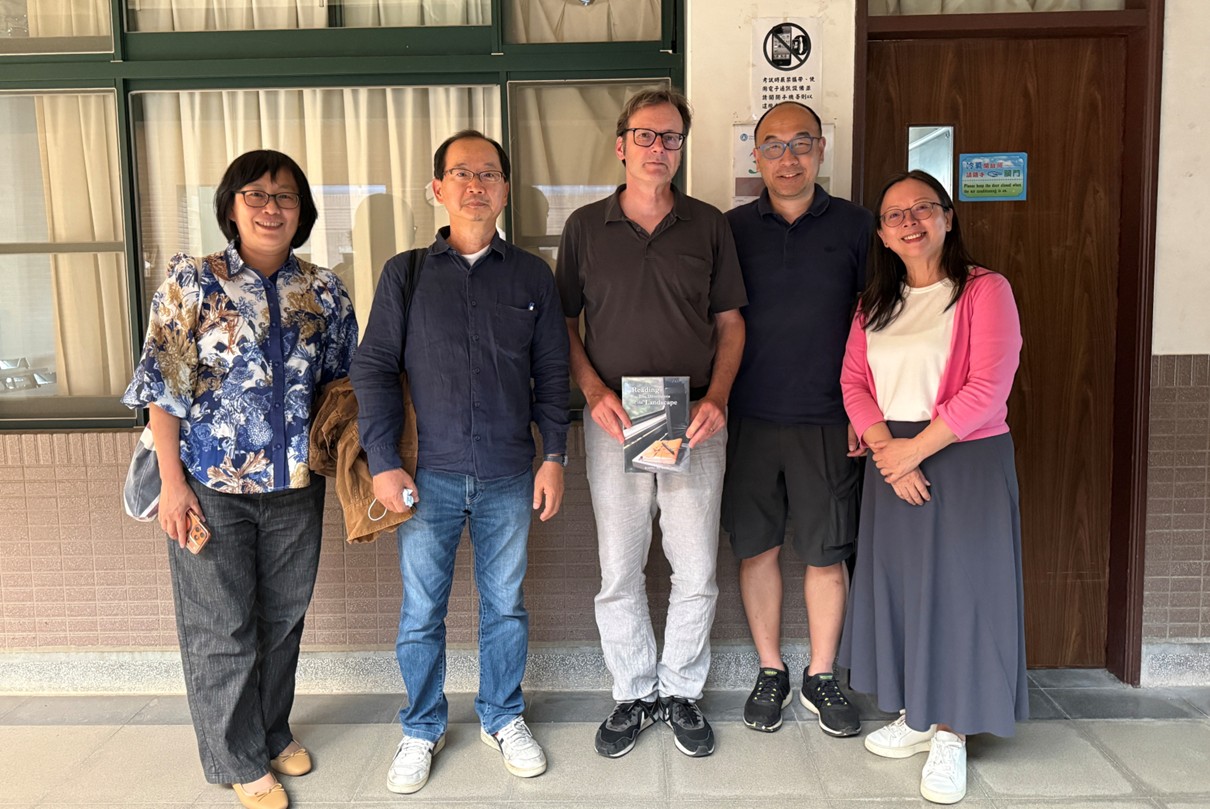
In addition to the public forum, Professor Michael Kloos participated in courses offered by CYCU’s Department of Architecture and Department of Landscape Architecture during his visit. Through case studies, discussions, and field visits, he introduced international perspectives on cultural heritage conservation, industrial heritage preservation, and urban planning, helping students connect theory with practice while engaging directly with a leading international scholar.

The event was supported by the European Union’s Jean Monnet Module, integrating EU perspectives on cultural governance and sustainable development into teaching and research. By introducing European approaches to heritage management and historic urban conservation, the program further strengthened international engagement in Taiwan’s cultural heritage sector.
According to Professor Hsiao-Wei Lin of CYCU’s Department of Architecture and the event organizer, the program combined academic learning with international exchange, providing students with valuable opportunities to interact directly with global scholars and develop cross-cultural perspectives. Discussions during the visit also explored future collaborations in research, faculty exchange, and student mobility programs. CYCU will continue to expand international partnerships and build a global network for cultural heritage research and education.