


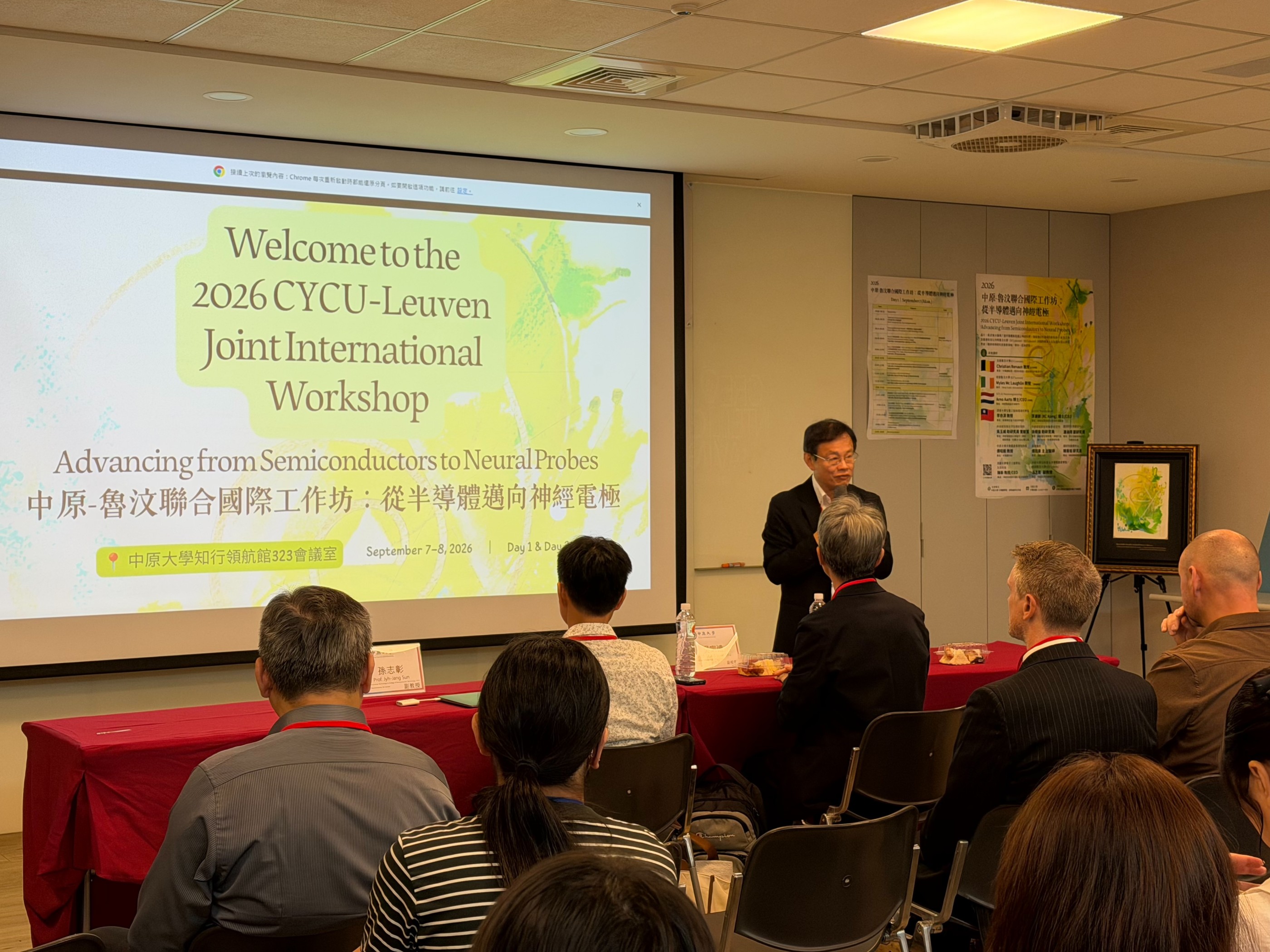
Expanding from semiconductor research into emerging brain technologies, Chung Yuan Christian University (CYCU) is strengthening interdisciplinary research and international collaboration in advanced technology fields. On September 7–8, CYCU and KU Leuven jointly hosted the 2026 CYCU–Leuven Joint International Workshop: Advancing from Semiconductors to Neural Probes.
The workshop brought together experts from KU Leuven, UCLouvain, Europe’s neurotechnology sector, and Taiwan’s academia, industry, government, and research institutions. Discussions focused on emerging developments in neural probes, brain–computer interfaces, neuromodulation, semiconductor processing, and artificial intelligence, highlighting new opportunities at the intersection of semiconductor technology and neuroscience.
.jpg)
The workshop was jointly organized by CYCU’s College of Semiconductor Industry, Office of Research and Development, and Department of Bioscience Technology. Focusing on “Advancing from Semiconductors to Neural Probes,” the event explored how Taiwan’s semiconductor strengths can be extended to neural probes and interface technologies, creating new opportunities in precision medicine, smart healthcare, and brain–computer interfaces.

Dean Chao-Ming Fu noted that neural probes are a key technology for next-generation neuroscience and brain–computer interfaces, enabling both the recording and stimulation of neural activity. Their applications range from brain-function research and neurological disease studies to deep brain stimulation and neuroprosthetics.
The workshop featured international experts including Myles McLaughlin of KU Leuven, who presented research on neuromodulation and brain stimulation; Arno Aarts, CEO of ATLAS Neuro, who shared insights into neural probe design and manufacturing; and Christian Renaux of UCLouvain, who discussed the use of semiconductor processing and MEMS technologies in neural device fabrication.
Speakers from Taiwan included experts from the National Center for High-performance Computing, National Laboratory Animal Center, Academia Sinica, National Tsing Hua University, Chang Gung Memorial Hospital, and the neurotechnology industry.
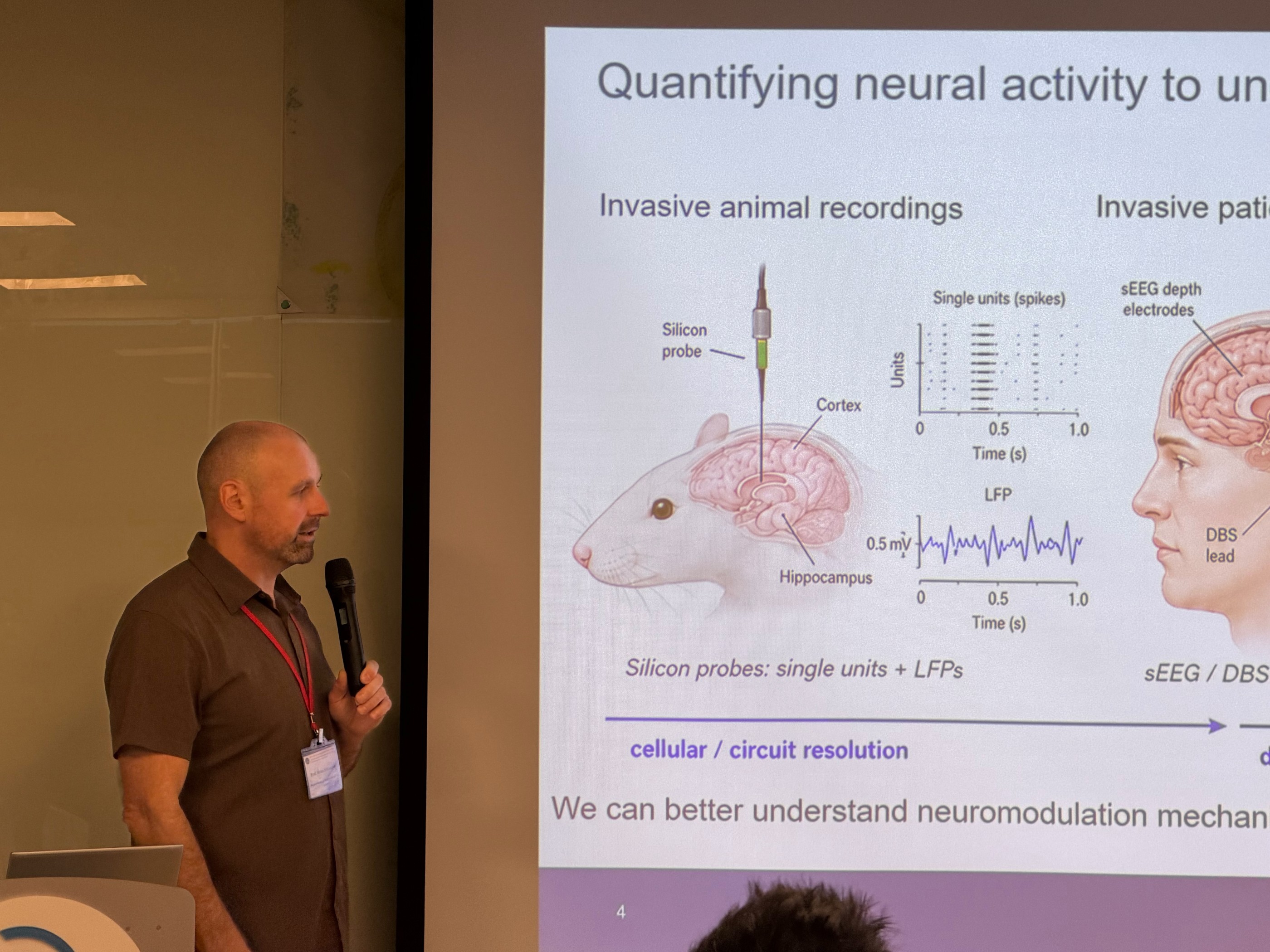
Topics ranged from neural network simulation and AI to neural signal amplifier IC design, organ-on-a-chip technology, in vivo electrophysiology, brain implants, neurosurgical needs, and signal acquisition systems, providing a comprehensive view of neural probe development from research and engineering to clinical application.

Beyond the keynote sessions, the workshop featured poster presentations and an industry technology showcase with participation from ATLAS Neuro, BioPro Scientific, and Kontex, creating opportunities for exchange between academia and industry. Through research posters and product demonstrations, participants gained insights into emerging neural interface technologies and explored potential areas for collaboration.
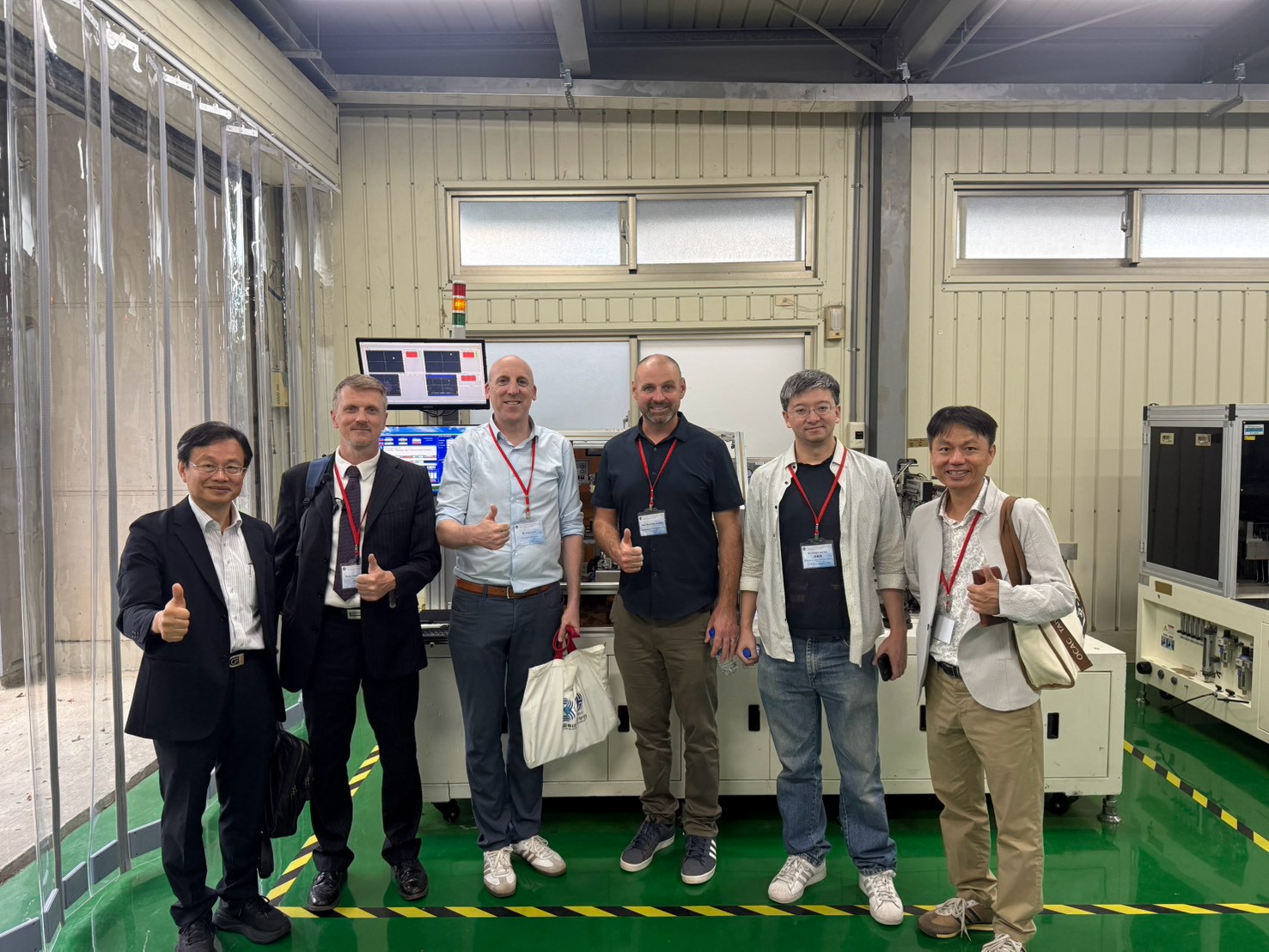
The second day included the “Future of Neural Probe Technologies” forum and a roundtable on “Future Collaboration Between CYCU and Leuven,” focusing on future technology directions and international partnership models. Participants also visited CYCU’s advanced power semiconductor education facility, highlighting the university’s strengths in hands-on training and applied research.
Dean Chao-Ming Fu emphasized that Taiwan’s world-class semiconductor ecosystem can create a strong international advantage when combined with neuroscience, biomedical engineering, and artificial intelligence. Visiting Associate Professor Chih-Chang Sun added that neural probes and brain–computer interfaces have become major areas of global research competition, making interdisciplinary talent and technology integration increasingly important.
By launching its first international neural probe workshop with KU Leuven, CYCU is building a stronger global research network at the intersection of semiconductors and neurotechnology. The initiative also opens new opportunities for deeper research collaboration and interdisciplinary talent development between the two universities.