


Chung Yuan Christian University (CYCU), in collaboration with the China Productivity Center (CPC) and industry and research institutions from Taiwan and Indonesia, has jointly initiated the establishment of the Low-carbon Circular Technology Alliance (LCTA) to advance low-carbon technological innovation and cross-border industrial collaboration. On October 21, 2026, CYCU hosted the “LCTA Initiative and Smart Green Technology Co-Creation Forum” at its Science Park, bringing together more than 70 representatives from government agencies, academic and research institutions, and enterprises across Taiwan, Indonesia, India, Japan, and Europe to mark a significant milestone in the alliance’s establishment.
The event was jointly organized by CYCU’s High-Value Industry Promotion Center (HVIP) and CPC through the international cooperation network of the Asian Productivity Organization Center of Excellence on Green Productivity (APO COE GP). Representatives from Taiwan’s Industrial Development Administration under the Ministry of Economic Affairs, Indonesia’s National Productivity Organization (NPO), and Indonesia’s National Research and Innovation Agency (BRIN) were invited to deliver remarks, highlighting the shared commitment of Taiwan and Indonesia to low-carbon transformation, the circular economy, and international industrial cooperation. Representatives from Taiwan’s Resource Circulation Administration under the Ministry of Environment, as well as Indonesian and Dutch representative offices in Taiwan, also attended the event, demonstrating international support for the initiative.

During the LCTA founding members’ assembly, CYCU Chairman of the Board Kwang-Cheng Chang was elected Chair of the Alliance, while CPC Deputy General Manager Hung-Mou Lin was elected Vice Chair, laying the foundation for its future development. Moving forward, LCTA aims to connect government agencies, industries, academic and research institutions, and international partners to facilitate the exchange of low-carbon circular technologies, cross-border resource integration, and industrial collaboration, establishing an international cooperation platform linking Asia and Europe.
LCTA was jointly initiated by three Indonesian organizations—the Energy and Manufacturing Research Organization of the National Research and Innovation Agency (BRIN-OREM), the overseas representative office of Induk KUD, and the Indonesian chapter of Next Federation—along with 11 Taiwanese industry and research organizations, including CYCU’s HVIP, CPC’s APO Center of Excellence on Green Productivity, the Resource Circulation Industry Promotion Association, and the Taiwan Resource Recycling Association. By integrating international technological expertise, talent, and market resources, the alliance seeks to accelerate the transition of low-carbon circular technologies from research and development to demonstration, validation, and industrial applications.
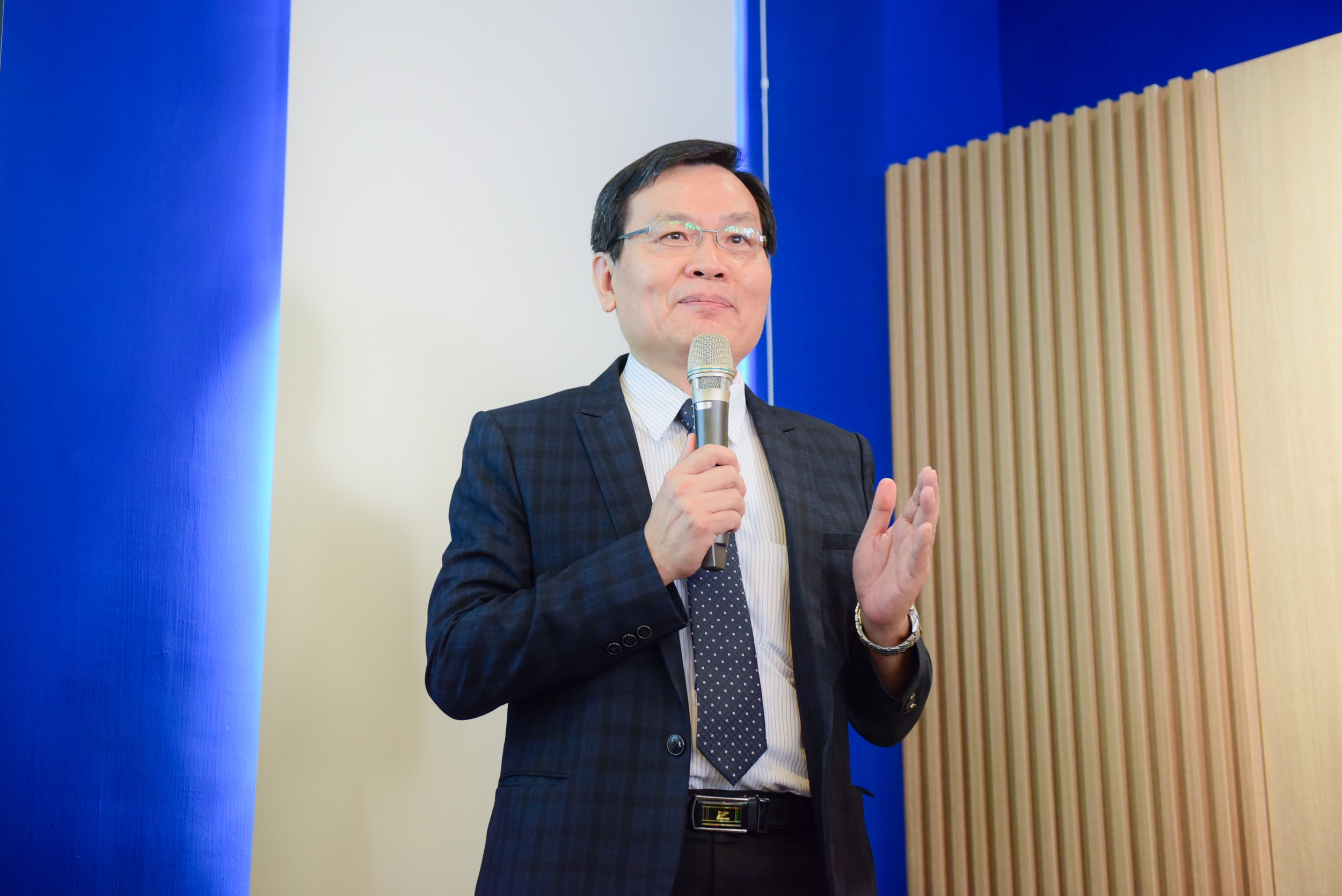
Tsai-Wang Chung, Director of CYCU’s HVIP and Secretary-General of LCTA, emphasized that as industries worldwide accelerate their low-carbon transition, no single institution or country can independently address the challenges of net-zero transformation and climate resilience. LCTA will focus on four strategic pillars: technology co-creation, demonstration and validation, industrial connectivity, and international expansion. By integrating resources from government, industry, academia, and research institutions, the alliance will promote collaboration in low-carbon manufacturing processes, circular materials, smart manufacturing, digital carbon management, and green supply chains, bridging technological innovation with practical industrial needs.
During the event, industry representatives from Indonesia and Japan visited several Taiwanese enterprises and organizations, including Tex Year Group, the Taiwan Bio-based and Sustainable Materials Industry Association, Techman Robot, and other companies specializing in green energy, environmental technologies, and advanced manufacturing. Delegates also toured CYCU’s Membrane Technology Research and Development Center and Smart Manufacturing Research and Development Center to gain insights into technological innovation and industrial applications. In addition, LCTA engaged with international partners, including Drive International, Japan’s Osaka-based S.K.H. Co., Ltd., and India’s Infosys Group, to explore potential collaboration in low-carbon circular technologies, clean water solutions, and digital innovation.

Chung further explained that with the implementation of the European Union’s Carbon Border Adjustment Mechanism (CBAM) and increasingly stringent global green supply chain requirements, businesses face growing challenges in carbon emissions management, low-carbon manufacturing, resource circulation, and supply chain transparency. With Taiwan serving as a key cooperation hub, LCTA aims to connect partners across Indonesia, India, Japan, Türkiye, and Europe, gradually developing an Asia–Europe low-carbon circular technology cooperation corridor.

CYCU’s HVIP and CPC emphasized that LCTA is designed not merely as an international exchange platform but also as an action-oriented mechanism for technology commercialization, industrial partnerships, and market expansion. By leveraging Taiwan’s strengths in semiconductors, artificial intelligence (AI), smart manufacturing, and circular technologies, the alliance plans to facilitate cross-border technology matchmaking, proof-of-concept (POC) projects, and demonstration site development, accelerating the real-world adoption of innovative solutions.

The LCTA founding members’ assembly represents an important step toward transforming international dialogue into collaborative innovation and expanding individual partnerships into interconnected cross-border industrial networks. CYCU’s HVIP and CPC will continue strengthening Taiwan–Indonesia cooperation while expanding partnerships throughout Asia and Europe, jointly advancing low-carbon circular technology innovation, green industrial transformation, and regional sustainability toward a net-zero future.


