



How CYCU’s Department of Electrical Engineering equips students with the skills to thrive in the age of AI.
As artificial intelligence continues to reshape industries and accelerate technological innovation, the demand for engineering talent has never been greater. Guided by its philosophy of holistic education, Chung Yuan Christian University’s (CYCU) Department of Electrical Engineering equips students with not only strong technical expertise but also interdisciplinary thinking, global perspectives, communication skills, and a strong sense of social responsibility—qualities that prepare them to thrive in an AI-driven future.
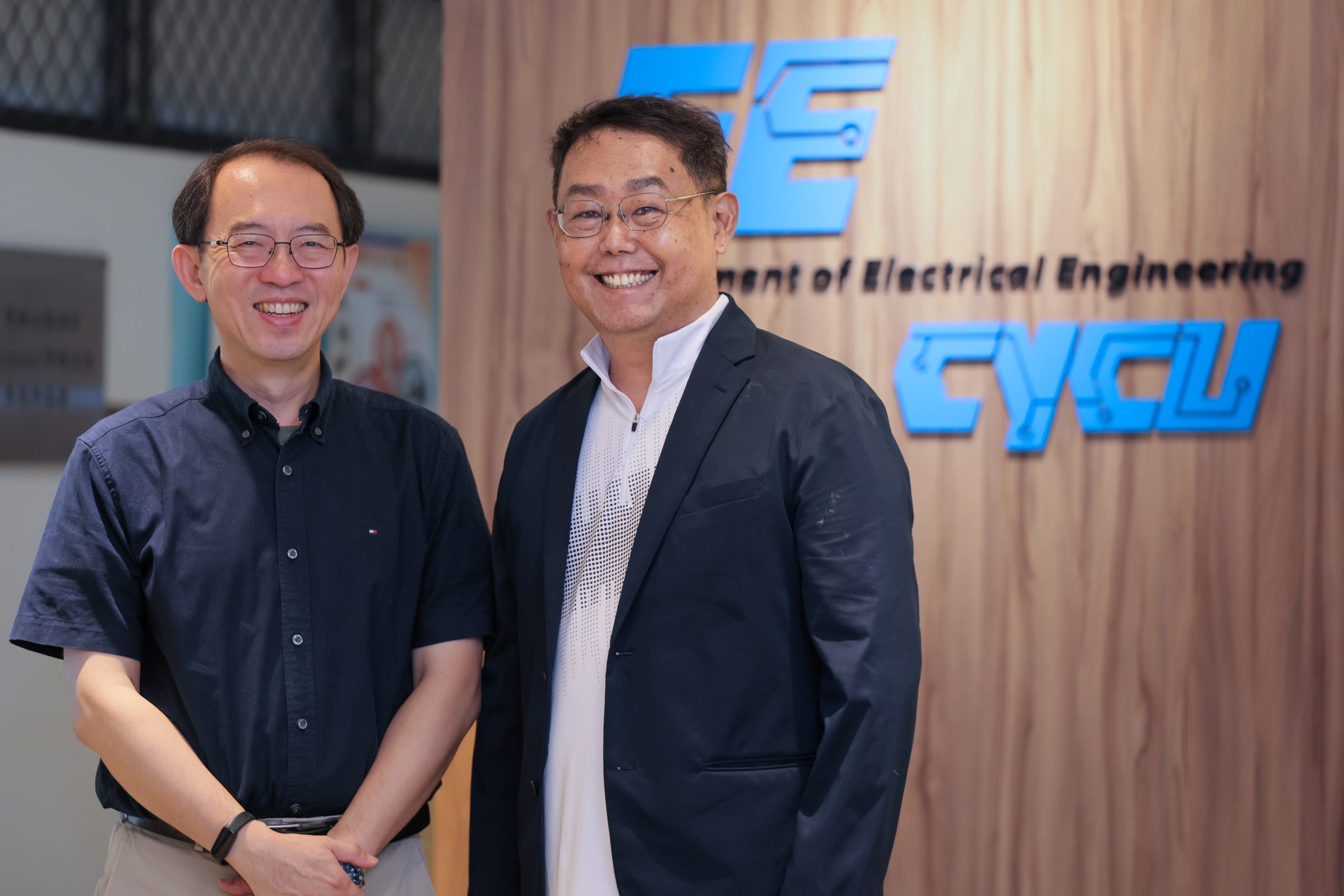
Professor Yu-Kun Lai, Chair of the Department of Electrical Engineering, believes that while AI can provide answers, it cannot replace human qualities such as integrity, responsibility, communication, and collaboration. As knowledge becomes increasingly accessible, he explains, employers are placing greater value on problem-solving ability, teamwork, and resilience than on technical skills alone.

Beyond Semiconductors: Building the Foundation of Future Technologies
Although Taiwan’s globally competitive semiconductor industry has drawn increasing attention to electrical engineering, Professor Lai emphasizes that the discipline extends far beyond chip design. Electrical engineering provides the technological foundation for a wide range of emerging fields, including smart grids, renewable energy, communications networks, artificial intelligence, cybersecurity, intelligent control systems, and electronic system design.
“Electrical engineering is the backbone of technological innovation,” Lai said. “Whether in AI computing, smart manufacturing, low-carbon transformation, or digital services, every advancement depends on reliable power systems, communications infrastructure, and intelligent control technologies.”
To prepare students for these challenges, CYCU’s Department of Electrical Engineering focuses on four core areas: power and energy systems, communications and networking, intelligent control systems, and electronics and circuit design. Through a curriculum that combines solid technical training with interdisciplinary integration, students develop systems thinking and gain the ability to connect technologies with real-world industrial and societal needs.
From the Classroom to Industry: Learning by Doing
As AI tools become increasingly accessible, the ability to solve real-world problems has become a defining advantage for future engineers. Professor Cheng-Yuan Chang, a specialist in control systems and former Dean of CYCU’s College of Electrical Engineering and Computer Science, believes engineering education must extend beyond simulation and theory. Students need hands-on experience to develop the practical skills required to tackle real engineering challenges.
To bridge the gap between academia and industry, CYCU’s Department of Electrical Engineering emphasizes project-based learning and industry collaboration. Students gain practical experience through research facilities such as the University’s anechoic chamber and acoustic vibration control laboratory, where they participate in industry-sponsored projects spanning system design, testing, and problem-solving. The department also adopts a “one student, one workstation” approach, ensuring every student gains direct hands-on experience. According to Professor Chang, true engineering competence is not only about understanding theories, but also about turning ideas into practical solutions—an ability that will remain essential in the AI era.

From the Classroom to Industry: Learning by Doing
As AI tools become increasingly accessible, the ability to solve real-world problems has become a defining advantage for future engineers. Professor Cheng-Yuan Chang, a specialist in control systems and former Dean of CYCU’s College of Electrical Engineering and Computer Science, believes engineering education must extend beyond simulation and theory. Students need hands-on experience to develop the practical skills required to tackle real engineering challenges.
To bridge the gap between academia and industry, CYCU’s Department of Electrical Engineering emphasizes project-based learning and industry collaboration. Students gain practical experience through research facilities such as the University’s anechoic chamber and acoustic vibration control laboratory, where they participate in industry-sponsored projects spanning system design, testing, and problem-solving. The department also adopts a “one student, one workstation” approach, ensuring every student gains direct hands-on experience. According to Professor Chang, true engineering competence is not only about understanding theories, but also about turning ideas into practical solutions—an ability that will remain essential in the AI era.
A Strong Alumni Network and Global Opportunities
Talent development extends beyond the classroom. Many CYCU Electrical Engineering alumni have become industry leaders, technical experts, and entrepreneurs, and continue to support the department by offering mentorship, industry-sponsored projects, internships, and equipment resources. This close collaboration between alumni, industry, and the University provides students with valuable real-world experience and has become one of CYCU’s greatest strengths.
The department also places a strong emphasis on global engagement. Through long-standing partnerships with universities in Japan, the United States, and other countries, students are encouraged to participate in overseas research, international conferences, and dual-degree programs. According to Professor Yu-Kun Lai, these experiences strengthen students’ cross-cultural communication skills and global perspectives, while Professor Cheng-Yuan Chang noted that studying abroad also builds confidence, independence, and adaptability—qualities that are increasingly essential for engineers in today’s global workforce.

Moving Forward in the Age of AI
As AI continues to transform industries and redefine the skills future talent will need, CYCU has also placed growing emphasis on students’ well-being and personal development. Launched in 2023 by Professor Cheng-Yuan Chang with the support of alumni, the “Starlight Project” provides mentorship and counseling to help students navigate academic pressure, personal challenges, and important life decisions.
“Talent competition ultimately comes back to people,” Professor Yu-Kun Lai emphasized. “We hope to help students find the courage to embrace the future.” From professional training and interdisciplinary learning to communication skills, industry practice, and global engagement, CYCU’s Department of Electrical Engineering aims to prepare students not only to keep pace with technological change, but also to use technology wisely, understand the world, and create new possibilities for society. These are the abilities and sense of mission the department hopes to pass on to every student as they move forward in an era of constant change.
Source: Global Views Monthly